Echo:Secret Share&Make friends
- 4.4
- Rating
- 1.00M
- Installs
- Free
- Price

 Analysis by App-foxy
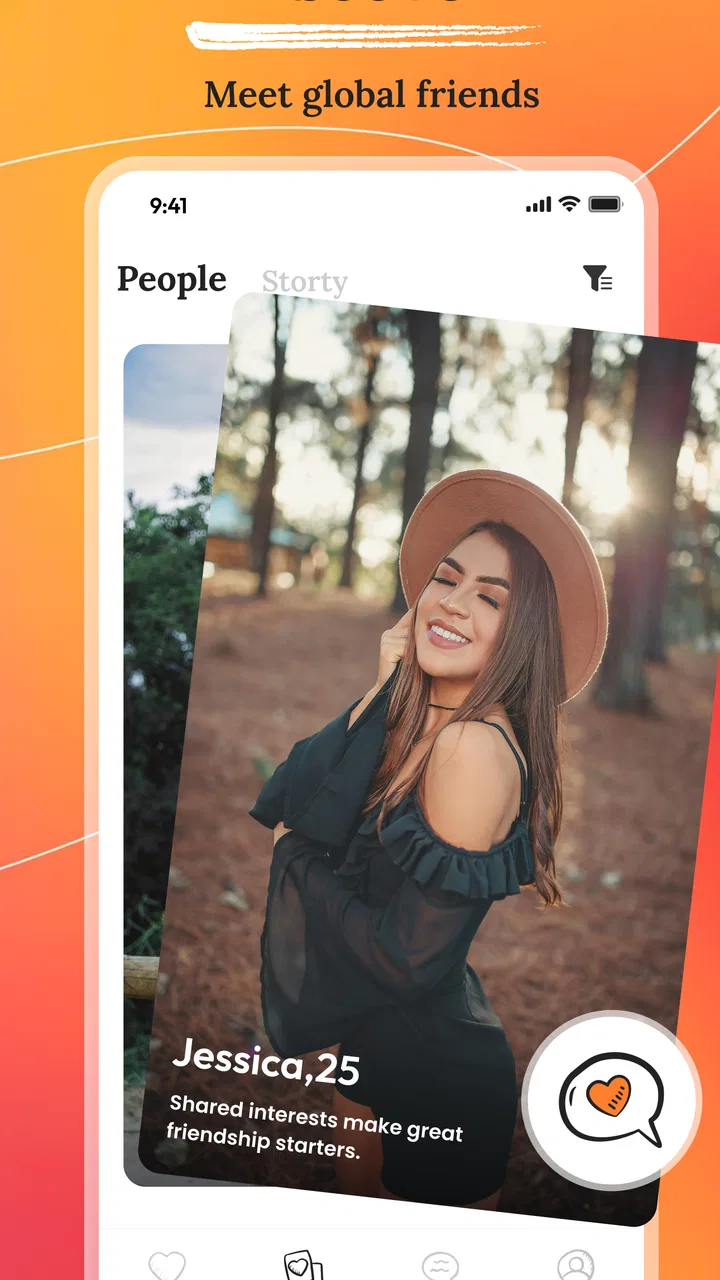
I approached Echo:Secret Share&Make friends as a social app for people who want conversation to feel more immediate than a standard text feed. Its central appeal is easy to understand: meet people, exchange messages, and move into video chat when a conversation feels comfortable. After spending time with it, my view is that Echo works best as a spontaneous social space rather than as a carefully organized community platform. It can make meeting new people feel direct and lively, but that same openness means you need good judgment about who you engage with and how quickly you move from public interaction to private conversation.
The app comes from RIPPLECHAT and sits in the social category. It is free to install, with optional purchases ranging from $0.99 to $203.99 per item. That pricing structure matters because the basic download is easy to try, while the possible purchase range is wide enough that I would not spend casually. Echo is intended for mature users aged 17 and over, and I think that rating should be treated as practical guidance rather than a decorative label. Video-based socializing can become personal quickly, so the app is a better fit for adults and older teens who already understand how to set boundaries online.
How Echo feels when you actually use it
I find Echo easiest to judge by asking what I want from a social app: a quick, personal conversation with someone new, or a more structured space built around familiar contacts and shared interests. Its appeal is the possibility of moving from an initial exchange toward sharing and video when it feels right, so I’d approach it with a small, clear intention rather than opening it just to browse. That distinction helps explain where it fits—and where a different kind of social app may serve you better.
You May Also Like

 Blood Strike: 2.5 Anniversary
Blood Strike’s Loadouts Turn Every Drop Into a Tactical Gamble
A close look at Blood Strike’s custom loadouts: how fast access to signature weapons reshapes its battle royale rhythm, rewards preparation, and narrows the gap between fights.

 Pandora - Music & Podcasts
Pandora’s Music Is Easy to Start, but Harder to Recover
Pandora’s strength is its low-effort path from a seed to a station. Its weak spot is how much confidence it asks you to place in connection, setup, and quiet recovery.

 8 Ball Pool
 Is Built on Rivalries, Rematches, and Routine
A close look at the rivalries, rematches, shared routines, and unanswered safety questions that turn a quick pool match into a persistent mobile community.

 Samsung Music
’s Quiet Strength Is Playing What You Already Own
Its reach comes less from spectacle than from dependable access to a personal library. That simplicity is both the app’s strongest retention engine and its ceiling.

 AccuWeather: Weather Radar
AccuWeather Review: A Quick, Clear Forecast for Everyday Decisions
For everyday plans, the best forecast is the one you can understand quickly. AccuWeather makes rain timing, radar, and local conditions easy to act on, with a few trade-offs.

 Hill Climb Racing
Why Hill Climb Racing Still Turns Crashes Into One More Run
A tiny car, a bumpy hill and one more upgrade: Hill Climb Racing keeps resurfacing because its simple chaos makes every near-miss feel personal.
More From Our News Desk
View All News


A direct route from discovery to conversation
What gives Echo its identity is the short distance between finding someone and speaking with them. Many social apps make you build a profile, collect followers, or wait for a mutual connection before anything meaningful happens. Echo is more immediate. Its promise is built around making friends, sharing, and video chatting, so the experience feels oriented toward interaction instead of passive browsing.
That immediacy is useful when I have a small amount of free time and want a social exchange without committing to a large online community. For example, imagine finishing work, having twenty minutes before dinner, and wanting to talk to someone outside your usual circle. Echo suits that moment better than a traditional group forum, where the conversation may already be moving in another direction. The app’s appeal is not deep organization; it is the possibility of a quick human connection.
I also found that the video element changes how I judge a conversation. Text can be entertaining while still leaving both people uncertain about tone or intention. A video chat gives more context, but it also asks for more confidence. I would not treat the move to video as an automatic next step. A better workflow is to begin slowly, see whether the other person respects ordinary boundaries, and only then decide whether a live call is worthwhile.
Sharing is more useful when it supports conversation
The sharing side of Echo makes more sense when it is used as a bridge rather than as the whole experience. Sending something that reflects your interests can give a new contact an easy subject to respond to. That is less awkward than opening with a vague greeting, especially when both people are strangers and neither knows what to say.
My practical tip is to share something that reveals a preference without exposing personal information. A hobby, a general interest, or a harmless topic can start a conversation while keeping the first exchange low-risk. I would avoid sharing anything that identifies where I live, where I work, or when I am usually alone. The social design encourages openness, but good use depends on deciding what should remain private.
This is also where Echo differs from a conventional messaging app. A regular messenger is usually built around people I already know, while Echo is more about creating a new connection. That makes it more exciting, but less predictable. If I want reliable communication with family, colleagues, or established friends, I would choose a familiar messenger. If I want to explore new conversations, Echo has a clearer reason to exist.
The app’s strongest quality is social momentum
Echo’s strongest evidence is the way its different activities support one another. Meeting someone can lead to sharing; sharing can create a topic; a good topic can lead to video chat. None of those actions has to stand alone. The sequence gives a conversation somewhere to go, which is valuable because many social apps are good at discovery but weak at helping people move beyond a first message.
I can see why the app has attracted a sizeable audience, with more than one million installs and an average rating of 4.4 from around 9.6 thousand ratings. Those figures suggest that the basic idea is connecting with users, although they do not remove the need to judge individual interactions carefully. I would read the rating as encouragement to try the experience, not as proof that every conversation will be enjoyable or suitable.
The current version is 1.4.5, and the app supports Android 7.0 and later. That compatibility is helpful for people using older Android phones, though social apps can still feel different depending on the device, camera, microphone, and connection. For video chat in particular, I would test the experience at home before relying on it while traveling or using a limited mobile connection.
Where the experience becomes less comfortable
The meaningful weakness is that immediacy can also create friction. When an app makes it easy to meet strangers and start video conversations, the user has to do more of the filtering. I would not assume that a friendly profile, an engaging message, or a confident video presence tells me enough about a person. Echo can open the door to conversation, but I still have to decide who deserves more time and access.
That makes the app less suitable for anyone looking for a tightly moderated, purpose-specific community. If I want conversations about one defined subject, a specialist forum or interest-based group will probably give me better context. If I want professional networking, a work-focused platform is a safer match for that goal. Echo is broad and social, which is its strength for casual discovery and its weakness for users who want a clear shared purpose.
I am also cautious about the purchase system. Echo is free to install, but optional items can cost from $0.99 up to $203.99 each. That gap is large enough to make checking every purchase screen important. I would begin with the free experience, decide whether the conversations and tools genuinely fit my routine, and set a spending limit before buying anything. A social app can make optional extras feel urgent because the user is already emotionally involved in a conversation; that is exactly when I would slow down.
Another limitation is the emotional energy required. Video chatting with new people can be rewarding, but it is not effortless. I may need to leave conversations that feel uncomfortable, explain a boundary more than once, or accept that some interactions simply go nowhere. Someone who wants a quiet, low-pressure way to pass time may find a text-first community more relaxing. Echo asks for participation, not just scrolling.
How I would use it safely and efficiently
My preferred approach is to treat the first interaction as a test, not a commitment. I would keep early messages general, avoid moving immediately to another service, and watch how the other person responds to a simple limit. For instance, saying that I am not ready for video yet can reveal a lot. A respectful response is a positive sign; pressure, guilt, or repeated requests is a reason to end the conversation.
I would also separate the app from my daily identity as much as possible. That means being careful with photos, usernames, backgrounds during video calls, and details visible in anything I share. A bedroom, workplace, school item, street sign, or regular schedule can reveal more than intended. This is not a criticism unique to Echo; it is a particularly important consideration because the app’s purpose is direct interaction with new people.
For video calls, I would use a neutral setting and decide in advance how long I am willing to stay. A short first call is easier to end than an open-ended one. If the interaction is enjoyable, there will be another opportunity to talk. I would never let the excitement of a promising conversation override basic caution, and I would not send money or sensitive material to someone met through a social app.
There is also a useful way to prevent Echo from becoming a time sink. I would open it with a specific intention: have one or two conversations, explore a particular interest, or check whether a contact is worth continuing with. Without that limit, the stream of new people can encourage endless browsing. The app is more rewarding when I use its discovery tools to find a good conversation rather than measuring success by how many people I contact.
Who will get the most from Echo
Echo is a strong candidate for people who enjoy meeting strangers, are comfortable with informal conversation, and want the option of moving from text or sharing into video. It may suit someone who has recently moved to a new place, wants to practice talking with people outside an existing friend group, or simply prefers a more personal exchange than likes and comments can provide.
It can also work for users who dislike the formality of traditional social networking. There is no need to turn every interaction into a polished public identity. The attraction is the conversation itself. If I am willing to be selective and patient, the app can provide a more human-feeling alternative to endlessly watching short posts.
I would recommend extra caution for younger users, even though the stated age category is 17 and over. Anyone who is not comfortable refusing a video request, ending a conversation, or protecting personal details should probably choose a more controlled social environment. The same applies to people who are currently looking for emotional support from strangers. Echo may create friendly contact, but it should not be treated as a substitute for trusted relationships or professional help.
People who need dependable moderation, structured groups, or work-related communication should skip it. A standard messenger is better for known contacts, a forum is better for focused discussion, and a professional network is better for career goals. Echo makes the most sense when the goal is casual, person-to-person discovery and the user accepts the responsibility that comes with it.
My verdict after weighing the trade-offs
After using it, I see Echo:Secret Share&Make friends as a lively but user-dependent social app. Its best quality is the way it encourages a conversation to develop: meet someone, share something, and decide whether video chat feels appropriate. That path is more engaging than a passive feed, and it gives casual socializing a sense of momentum.
Its biggest drawback is the same feature that makes it interesting. Direct access to new people means more uncertainty, more personal judgment, and a greater need to protect privacy. The broad purchase range also deserves attention, especially for anyone tempted to spend before learning whether the app fits their habits. I would keep the free experience at the center and treat optional spending as something to consider slowly, not as part of the basic requirement for socializing.
RIPPLECHAT has made an app that is easy to understand and potentially enjoyable in short, spontaneous sessions. I would recommend it to mature users who want new conversations and are comfortable setting firm boundaries. I would not recommend it to someone seeking a fully organized community, guaranteed compatibility, or completely passive entertainment. My clear recommendation is to try Echo with a cautious, conversation-first approach: keep early exchanges general, test respect for boundaries, use video selectively, and spend only if the free experience has already proved useful.
In that role, Echo has a convincing place among social apps. It is not a replacement for every messenger or community platform, but it offers a more immediate way to turn curiosity about other people into an actual exchange. For the right user, that is enough to make it worth trying; for everyone else, the need for caution and active participation may outweigh the novelty.
FAQs for Echo:Secret Share&Make friends
01What is Echo: Secret Share & Make Friends?
Echo: Secret Share & Make Friends is a social networking app designed for sharing thoughts, secrets, and personal updates with other users. Its main appeal is the possibility of communicating more privately or anonymously while discovering posts from people with similar interests. Before downloading, users should understand that the experience depends heavily on the active community, available features, and the privacy options offered in their region and app version.
02Can I use Echo anonymously, and how private are my posts?
The app is centered around more discreet social interaction, but anonymous sharing should not automatically be considered completely private. Depending on the feature, other users may still interact with, report, or identify the author through context, writing style, or personal details. Avoid publishing sensitive information, passwords, precise locations, or anything that could compromise your safety. Always review the visibility and account settings before posting.
03Is Echo: Secret Share & Make Friends safe for teenagers?
Echo may be appealing to younger users because it focuses on casual conversations, secrets, and meeting new people, but social discovery apps can also expose users to inappropriate content, harassment, fake profiles, or unwanted contact. Parents and teenagers should check the official age rating, read the privacy policy, and use blocking and reporting tools. Minors should never share personal details or agree to meet online contacts in person.
04Does Echo require an account or personal information to work?
The information required can vary depending on the platform, login method, and current version of the application. Some functions may be available after creating a profile, while others could require permissions or optional account details to improve recommendations and social interaction. Before registering, check which data is requested, whether third-party sign-in is supported, and whether you can delete your account and associated information later.
05Is Echo: Secret Share & Make Friends free to download and use?
The application may be available as a free download, but free access does not always mean that every feature is included without restrictions. Social apps commonly use optional purchases, subscriptions, advertisements, or paid tools that enhance visibility and interaction. Check the Google Play Store or Apple App Store listing for current pricing, in-app purchase details, subscription renewal terms, and cancellation instructions before committing to any payment.
Pros
- Anonymous sharing can make it easier to express thoughts openly.
- The simple feed design is easy to browse and understand.
- Useful for discovering people with similar interests and experiences.
- Posts can encourage supportive conversations and emotional connection.
- Lightweight social format requires less time than traditional networks.
Cons
- Anonymous posts may sometimes attract rude
- misleading
- or harmful content.
- Limited identity information can make genuine connections difficult to verify.
- The community experience may depend heavily on how active it is locally.
- Privacy settings should be checked carefully before sharing personal details.
- Frequent notifications or new posts may become distracting over time.

Echo:Secret Share&Make friends
Gallery